 Get The Ring Right
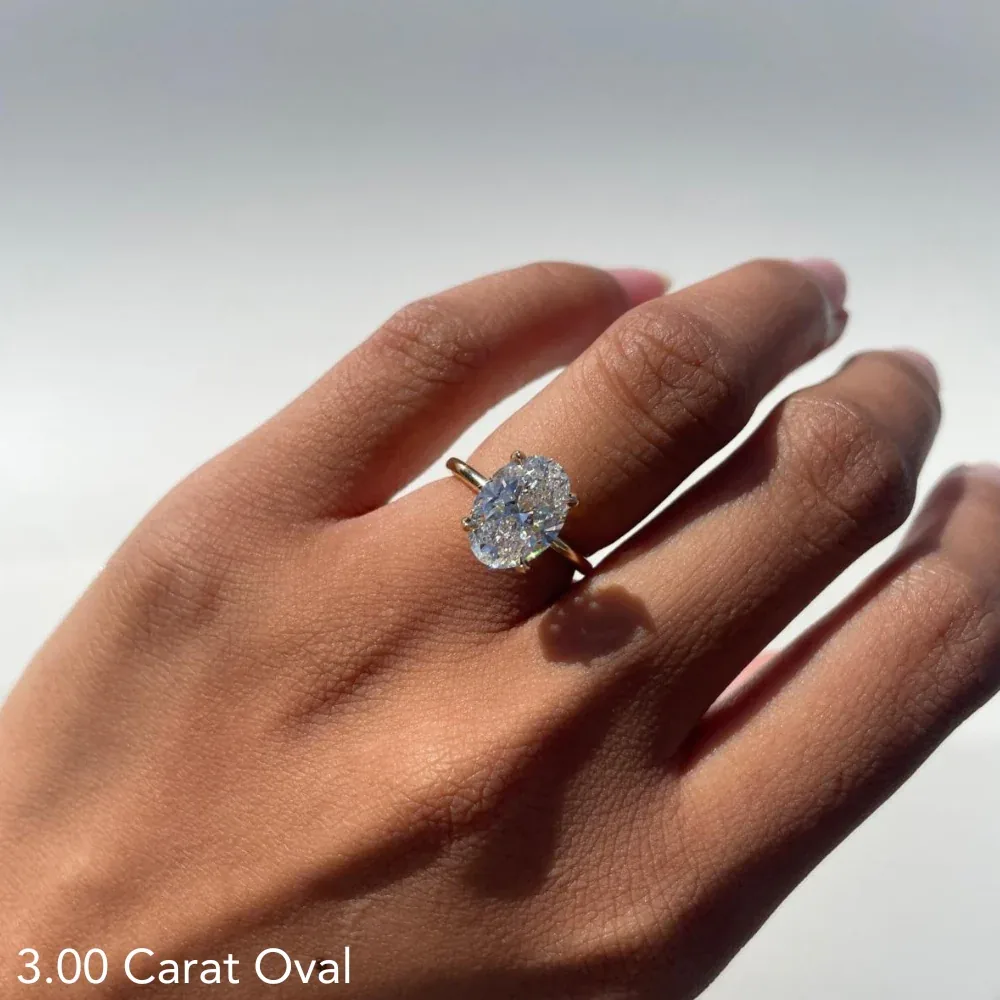
The safest answer is direct preference evidence. Friends, jewelry clues, and saved posts can help, but each leaves room for an expensive interpretation error.
1. Have a direct conversation when the ring itself does not need to be a surprise.
If you both discuss marriage openly, asking about ring preferences is the most transparent option. The proposal timing can still be surprising. Ask her to identify real examples and explain what she likes about each one rather than choosing broad labels such as "classic" or "modern."
This is less useful when she explicitly wants the ring and proposal process to feel unexpected.
2. Ask a trusted friend, but treat the answer as a clue.
A friend or family member may know whether she has mentioned an oval, yellow gold, or a particular jeweler. The weakness is precision: a remembered center shape does not resolve the setting, band, profile, side stones, or level of sparkle.
If a friend helps, ask for links or screenshots instead of a verbal description. Then compare the visible attributes across those examples.
3. Review jewelry and saved inspiration without over-interpreting it.
The metal she already wears can be informative. Pinterest and Instagram saves can reveal recurring shapes or settings. But everyday jewelry is not always a reliable proxy for the engagement ring she would choose, and an old saved image may no longer reflect her taste.
Do not access private accounts or devices without permission. Use only information she has shared with you or made available to you.
4. Let her react to ring designs inside a discreet study.
A visual preference study preserves the proposal while replacing inference with direct choices. With Get The Ring Right's managed survey, a named jewelry research partner invites her to review ring styles. Your identity, purchase, and proposal plans are not disclosed.
The survey begins broadly, then presents closer comparisons after her preferences become visible. It resolves five practical questions: shape, setting, metal, band, and overall profile.
What information should you know before buying?
- Stone shape: the center outline she prefers.
- Setting: how the center and surrounding stones are held and arranged.
- Metal: the visible color of the ring and any mixed-metal preference.
- Band: plain, pave, split, wide, tapered, twisted, or another treatment.
- Profile: whether the ring feels minimal, classic, vintage, architectural, romantic, or statement-making.
Carat size, stone quality, ring size, durability, and final construction should then be confirmed with the jeweler. A preference profile tells you what visual direction to buy; it does not replace professional manufacturing decisions.