Proxy quiz
You answer questions about her. The output estimates a broad style category from your interpretation.
 Get The Ring Right
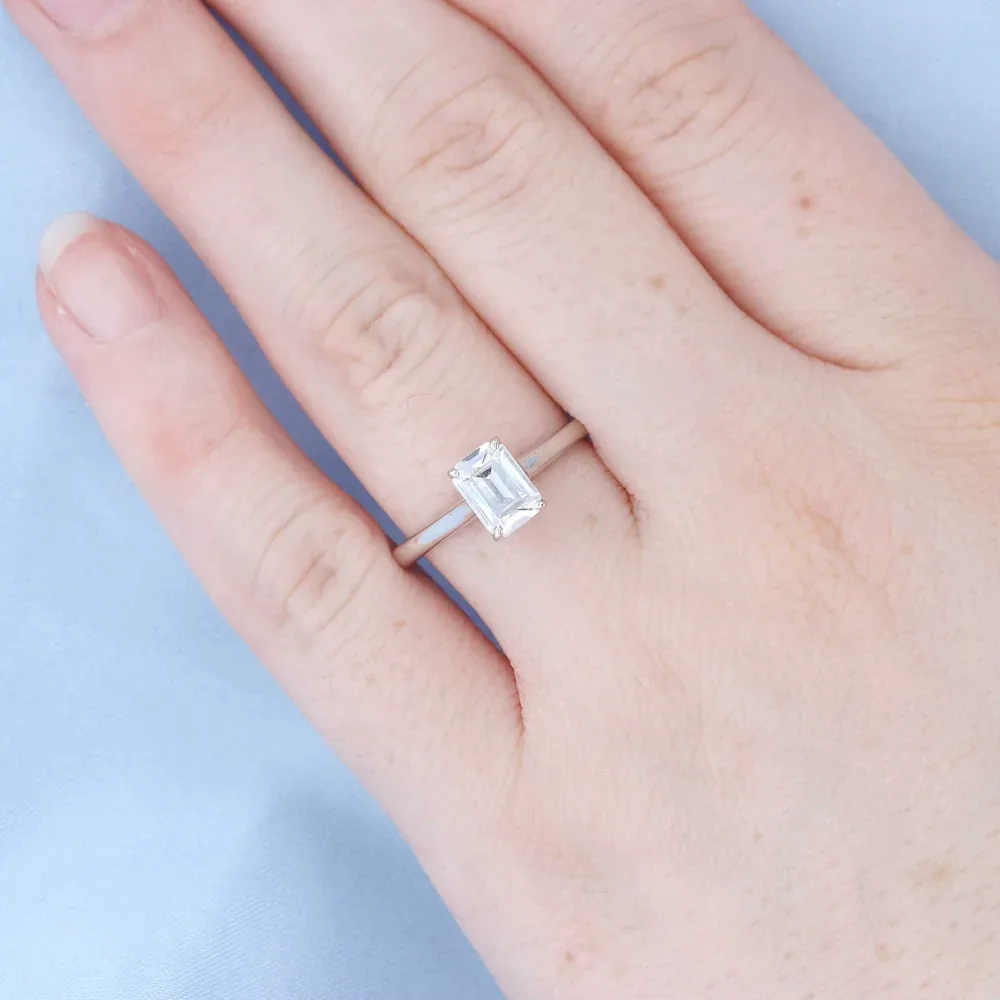
Visual style finder
A quiz you complete for her still depends on your interpretation. A discreet visual study lets her reactions resolve the stone shape, setting, metal, band, and overall style directly.
The important difference
A conventional quiz may ask about her clothes, vacations, or favorite era. Those answers can suggest an aesthetic, but they do not prove she wants a halo, a pave band, or an emerald-cut center stone.
You answer questions about her. The output estimates a broad style category from your interpretation.
She reacts to ring designs herself. The output measures recurring attributes across her accepted and rejected examples.
You receive the resolved attributes, a closest available match, and a visual direction rather than a personality label.
How the choices work
The study avoids narrowing too early, while still keeping the experience short.
The first 20 counted choices span all eight principal center shapes and a broad range of metals, settings, and bands.
Accepted and rejected attributes, swipe direction, distance, certainty, and dwell time update the preference profile. Swipes under 0.25 seconds are excluded from the model.
After breadth coverage, the study favors designs near her positive choices while preserving enough variation to distinguish details.
Completion rules
Both Signature Match and Self-Send use the same adaptive survey depth.
If needed, the study continues so the result is not built only from rejections.
The survey closes even when positive evidence remains scarce, preventing an open-ended experience.
The result names her preferred shape, setting, metal, band, and overall profile. It also identifies the closest publicly available ring in the catalog and retains the product source so you can inspect or purchase the real design.
A personalized visual concept shows those attributes together. It is a communication aid, not manufacturing CAD. The jeweler still confirms ring size, center-stone dimensions, prong geometry, tolerances, durability, and final construction.
See the full completed ring profile example or review how the 529-design library is sampled and validated.
Keep the proposal private and receive a result you can take to any jeweler.